


In Slab Heating & Cooling
In-slab heating operates quietly and efficiently, regulated by a Wi-Fi thermostat, and is virtually dust-free, making it an ideal choice for energy-efficient heating in new homes. Additionally, its zoning capabilities allow for customized climate control in different areas of the house. To maximize efficiency, it is recommended to insulate the ground beneath the structural slab to minimize heat loss.
In-screed underfloor heating and cooling has surged in popularity with the advent of advanced heat pumps capable of delivering this technology. The addition of sophisticated Wi-Fi-controlled thermostats, capable of measuring humidity and preventing condensation by avoiding the dew point, has further enhanced its appeal. In-screed UFH&C offers a significant energy efficiency advantage of 40% to 50% compared to traditional methods, as it
bypasses the need to heat or cool the substantial thickness of the structural slab or the ground beneath it, resulting in faster response times. While initial costs may be higher, the system quickly pays for itself through its enhanced efficiency within just a few years.
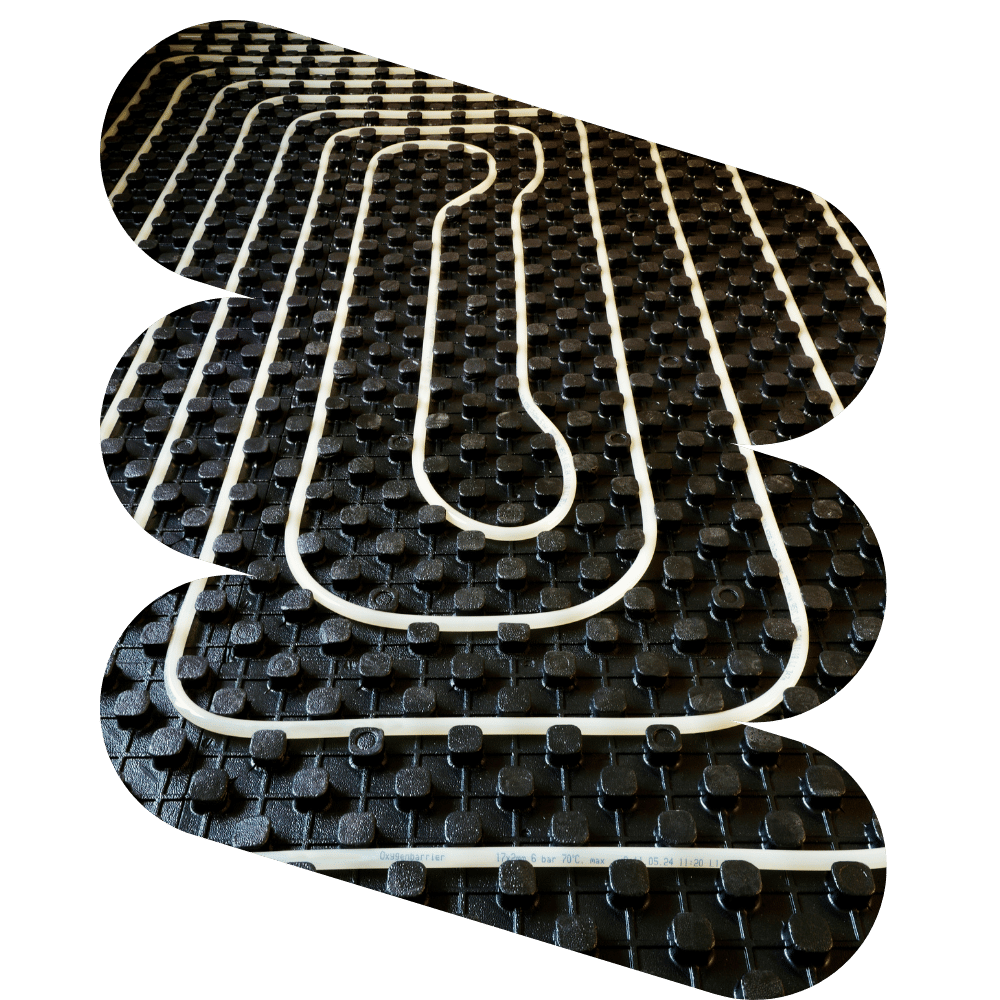


The insulated studded panel offers an optimal solution for both residential and commercial heating and cooling systems. Its design allows for the floor coil pipe to easily clip into place, and the panels connect seamlessly. Depending on the thickness of
the panel, insulation "R" ratings can vary. For renovations where minimizing screed height is essential, studded panels can be provided with an adhesive base without insulation, allowing for the use of a self-levelling polymer.